What Is MIG Welding?
MIG welding, also known as metal inert gas or gas metal arc welding, uses a consumable wire electrode that is continuously fed through a welding gun.
This continuous wire feed acts as both the electrode and filler material, creating an electric arc between the wire and the workpiece.
Shielding gas – often a mix including carbon dioxide – protects the weld pool from contamination.
The MIG welding process is known for:
- Faster welding speeds
- Making it ideal for thicker materials
- Production environments
- Welding mild steel.
MIG welders are generally easier to use, making MIG a popular choice for beginners and situations where acceptable welds are required quickly.
What Is TIG Welding?
TIG welding, or tungsten inert gas welding (also called gas tungsten arc welding), uses a non-consumable tungsten electrode to create the electric arc.
A hand held filler rod is added separately, giving the welder precise control over the weld puddle. The tig torch delivers shielding gas while the tungsten electrode remains intact.
Because TIG welding requires more coordination and control, it is considered harder and better suited to experienced welders or a highly skilled welder. TIG is excellent for:
- Thin materials
- Welding aluminium
- Applications requiring precise welds
- Clean tig weld beads
- High quality welds
MIG vs TIG Welding – Key Differences
When comparing MIG and TIG welding, speed and precision are major factors.
MIG offers faster welding speeds and deeper weld penetration on thicker metals, while TIG provides superior control over heat input, resulting in strong welds with minimal weld defects.
TIG welding produces clean, unpainted welds with excellent weld quality, whereas MIG is more forgiving and productive.
MIG uses a consumable wire electrode, while TIG relies on a non-consumable electrode and a separate filler rod.
TIG advantages include reduced weld bead porosity and better aesthetics, while MIG excels in efficiency and ease of use.
If still unsure about the key differences between these two coded welding methods, or any other for that matter, call us at Turkington at 0333 014 0223 for advice and support.
Materials, Equipment and Applications
Both processes use different welding equipment and welding machines. MIG welders are often chosen for welding thicker materials and large-scale fabrication, while TIG welding machines are preferred for intricate work, welding thinner materials, and high-spec jobs.
TIG welding can also reduce issues such as tungsten oxide formation when done correctly.
Your preferred method for the welding process can be determined simply by what you are tasked with welding. Both the MIG and TIG welding process are great options.
Which Welding Method Should You Choose?
Choosing MIG or TIG welding depends on the application, material thickness, and the desired weld quality.
- MIG is the go-to welding method for speed, productivity, and thicker metals.
- TIG is the preferred method for precision, appearance, and demanding applications.
Understanding the strengths of MIG vs TIG ensures better results and fewer issues causing weld defects.
Click here, call 0333 014 0223, or email info@turkington-es.co.uk to speak to us about your welding process needs, and find out whether MIG or TIG welding is better for you, and how we can help with the process.

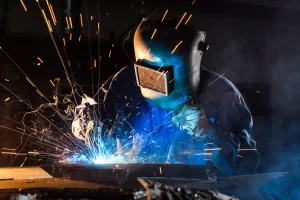 When it comes to modern metal fabrication, the debate of MIG versus TIG is one every welder encounters.